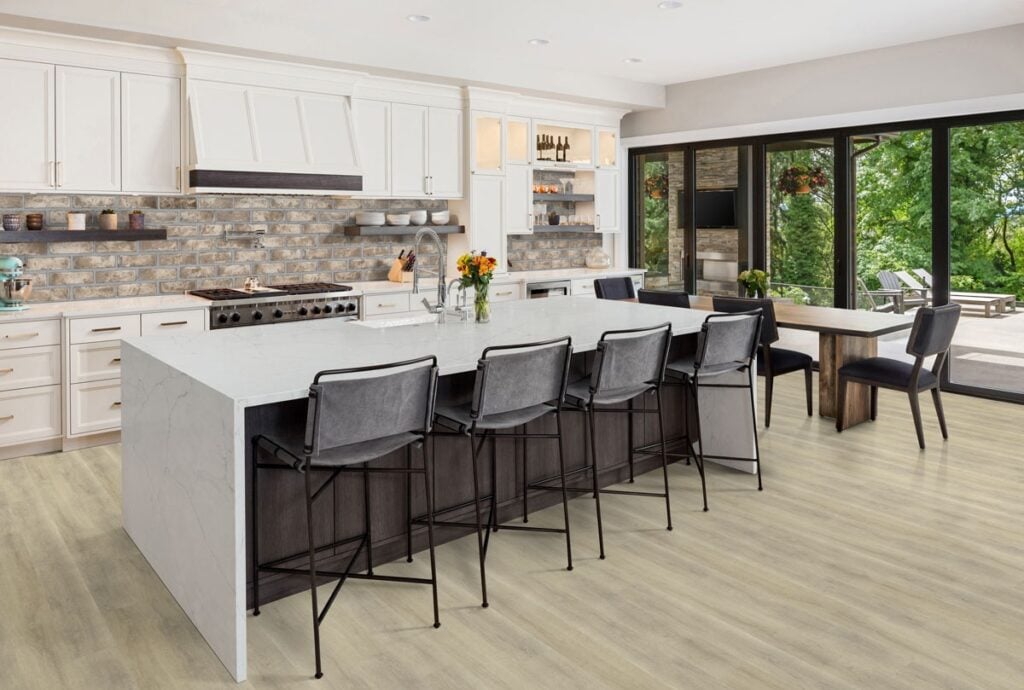
Luxury vinyl plank flooring, commonly called LVP flooring, has become one of the fastest-growing categories in the flooring industry. Contractors, home builders, restoration professionals, and homeowners across the United States are choosing it for durability, water resistance, and cost efficiency.
At The Flooring Supply, we connect professionals and DIY customers with high-quality flooring at competitive pricing. Whether you’re sourcing flooring in Greenville, Atlanta, or shipping nationwide, understanding LVP helps you make informed decisions that protect both your budget and performance.
This guide breaks down what LVP flooring is, how it’s constructed, where it performs best, and how it compares to other flooring options, such as LVT and engineered hardwood.
What Is LVP Flooring?
Luxury vinyl plank (LVP) flooring is a multi-layered resilient flooring product designed to replicate the appearance of hardwood while offering enhanced durability and moisture resistance.
Unlike traditional sheet vinyl, modern LVP flooring uses advanced printing and texturing technology to mimic natural wood grain patterns, knots, and surface variation. Many products also include embossed-in-register finishes that align texture with the printed design for a more realistic appearance.
LVP is typically installed in plank form, similar in size to hardwood boards. Its counterpart, LVT flooring (luxury vinyl tile), is manufactured in tile formats to replicate stone or ceramic.
How LVP Flooring Is Constructed
Understanding construction helps explain performance. Most LVP flooring products contain four primary layers:
1. Wear Layer
The transparent top layer protects against scratches, stains, and everyday wear and tear. Measured in mil thickness, this layer directly impacts durability. Commercial applications often require 20 mil or higher wear layers.
2. Print Film Layer
This layer contains the high-resolution image that gives the plank its wood appearance.
3. Core Layer
The core provides structure and stability. There are two common types:
- WPC (Wood Plastic Composite): Softer underfoot with added comfort and sound absorption.
- SPC (Stone Plastic Composite): Denser and more rigid, offering enhanced dent resistance.
4. Backing Layer
The base layer provides balance and may include attached underlayment for added acoustic performance.
According to the North American Laminate Flooring Association and industry testing standards such as ASTM International methods, properly manufactured rigid core vinyl products demonstrate strong dimensional stability under temperature changes and exposure to moisture.
Why LVP Flooring Has Grown in Popularity
Several factors explain the rapid growth of LVP flooring in both residential and light commercial applications.
Water Resistance
Unlike engineered hardwood, LVP does not absorb moisture. This makes it suitable for kitchens, bathrooms, basements, and restoration projects. For water-prone areas, LVP flooring reduces the risk of warping or swelling.
Durability
The wear layer protects against everyday abrasion. Research in surface coatings shows that polyurethane-based wear layers significantly improve scratch resistance compared to traditional vinyl finishes.
For contractors managing high-traffic projects, durability translates into fewer callbacks.
Installation Efficiency
Many LVP products feature click-lock floating systems, reducing installation time. For flooring professionals, faster installs improve labor efficiency and profitability.
Cost Efficiency
Compared to engineered hardwood, LVP flooring offers a lower material cost while delivering a comparable aesthetic. For budget-sensitive builds or rental properties, this balance makes LVP one of the best value flooring solutions available.
LVP vs. LVT vs. Engineered Hardwood
Understanding comparisons helps position LVP correctly for your project.
LVP Flooring
- Designed to replicate wood
- Waterproof or highly water-resistant
- Floating installation common
- Lower maintenance requirements
LVT Flooring
- Designed to replicate stone or tile
- Similar construction to LVP
- Often used in bathrooms or commercial settings
Engineered Hardwood
- Real wood veneer surface
- More sensitive to moisture
- Higher material cost
- Can be refinished in some cases
Engineered hardwood offers an authentic wood appearance, but in moisture-prone areas, LVP flooring often delivers longer-term stability.
Where LVP Performs Best
LVP flooring works well in:
- Residential living areas
- Rental properties
- Multi-family housing
- Light commercial spaces
- Restoration and insurance projects
- Kitchens and basements
For professionals operating in markets like flooring in Greenville, flooring in Atlanta, or flooring in Charlotte, LVP offers flexibility across climate zones due to its dimensional stability.
Return on Investment: Is LVP Worth It?
Return on investment (ROI) in flooring often comes down to durability, installation cost, and resale appeal.
While hardwood traditionally carries strong resale value, LVP flooring continues gaining acceptance among buyers. According to national remodeling reports, flooring upgrades consistently rank among improvements that positively impact resale potential.
For contractors, ROI also includes:
- Reduced installation time
- Lower material waste
- Fewer moisture-related failures
- Broader application range
When sourced as wholesale flooring or discount flooring through a trusted supplier, LVP can improve margins without sacrificing quality.
How to Choose the Right LVP Flooring
If you’re selecting LVP flooring for a project, consider these factors:
1. Wear Layer Thickness
- 12 mil: Residential use
- 20 mil+: High traffic or light commercial
2. Core Type
- Choose SPC for dent resistance
- Choose WPC for comfort and sound reduction
3. Subfloor Conditions
SPC performs better over imperfect subfloors due to rigidity.
4. Warranty and Certifications
Look for products meeting FloorScore® indoor air quality standards. Low VOC certification contributes to healthier indoor environments.
Installation Best Practices for Professionals
For contractors and flooring installers, installation quality directly affects performance.
- Acclimate materials as recommended
- Maintain expansion gaps
- Ensure subfloor is clean and level
- Follow manufacturer locking system instructions
Proper installation protects product warranties and reduces service issues.
Industry Innovation in LVP Flooring
The LVP category continues to evolve. Current innovations include:
- Improved embossed texture alignment
- Wider plank formats
- Enhanced acoustic underlayments
- More realistic matte finishes
As manufacturing technology advances, the gap between vinyl and natural hardwood aesthetics continues to narrow.
For flooring professionals, staying informed about these advancements simplifies client education and improves project outcomes.
Why Source LVP from The Flooring Supply?
The Flooring Supply connects contractors, builders, and homeowners with high-quality flooring options at competitive pricing. By focusing on LVP, LVT, and engineered hardwood, the company streamlines product selection and procurement.
With nationwide drop shipping and growing operations in Greenville and Atlanta, sourcing flooring becomes efficient and cost-effective.
Whether you’re building a flooring business, completing a renovation, or managing a large-scale project, having access to reliable wholesale flooring improves both workflow and margins.
Make Smarter Flooring Decisions
Luxury vinyl plank flooring has earned its place as one of the most practical and adaptable flooring solutions on the market. Its combination of durability, moisture resistance, and installation efficiency makes it suitable for professionals and homeowners alike.
If you’re evaluating flooring options for your next project, explore high-quality LVP flooring and other best-value flooring solutions at The Flooring Supply.
Visit https://theflooringsupply.com/ to review available products, compare options, and simplify your flooring supply process.