Multi-family flooring decisions are rarely about what looks good in a sample board. They’re about what still looks good after move-ins, furniture slides, cleaning crews, and turnover while keeping noise complaints down and install schedules on track.
If you build, renovate, or manage properties along the I-85 corridor (Greenville to Atlanta to the Charlotte region and everywhere in between), you already know the stakes: one bad flooring choice can create a repeat problem across dozens or hundreds of units. The good news is you don’t need “fancy” to get high-quality flooring. You need the right product for each space, a clear spec, and a supply plan that keeps jobs moving.
Below is a practical, pro-friendly guide to the best flooring options for multi-family builds focused on LVP, LVT, and engineered hardwood, plus how to spec them for performance and long-term value.
What Multi-Family Flooring Needs To Do (Beyond “Look Nice”)
In apartments, condos, and build-to-rent communities, flooring has to perform in a few specific ways:
Durability In Real Life
Think rolling luggage, chair legs, pet nails, strollers, and maintenance carts. You want surfaces that resist scratching and visible wear.
Fast Turnovers
A floor that’s easy to clean and quick to repair (or re-plank) saves labor and reduces vacancy time.
Sound Control
Footfall noise travels. This is why underlayment choices and tested assemblies matter, not just the finish material.
Moisture Resistance
Kitchens, laundry areas, entryways, and slab-on-grade units need materials that don’t swell or cup from everyday spills and humidity changes.
Indoor Air Quality (IAQ)
In tight modern buildings, low-emitting materials are a real consideration. Programs such as FloorScore for hard-surface flooring and UL GREENGUARD for low chemical emissions can help you establish a measurable baseline.
Predictable Procurement.
Consistent product availability, matching dye lots (where applicable), and direct-to-site delivery can be the difference between a smooth schedule and a painful one.
With those needs in mind, here’s how the big three options stack up.
Option 1: Luxury Vinyl Plank (LVP) for unit interiors and high-turnover properties
For many multi-family builds today, LVP flooring is the default for a reason: it’s resilient, water-tolerant, easy to maintain, and it installs quickly, especially in click/float formats.
Where LVP Tends To Work Best
- Living areas and bedrooms (especially in standard units)
- Kitchens (when paired with the proper underlayment and perimeter detailing)
- Renovations where speed and minimal disruption matter
What To Look For In A Multi-Family LVP Spec
Instead of buying based on “brand reputation” alone, spec around performance:
- For many multi-family applications, wear layer (mil) thickness is often specified to maintain a better long-term appearance in occupied units and rentals (especially with pets). (The “right” number depends on traffic type and your expectations; corridors vs bedrooms is not the same job.)
- Overall thickness and rigid-core products are standard to ensure stability and facilitate installation over minor subfloor imperfections.
- Edge profile and locking strength, such as Weak locking systems, show up later as gapping, peaking, or broken joints.
- Finish and texture matter; realistic embossing can better hide micro-scratches than glossy surfaces.
- If you need low-emitting material requirements, request recognized IAQ certifications, such as FloorScore.
Why ASTM Language Can Help You Avoid “Mystery Product” Substitutions
If you want your submittals and substitutions to stay honest, referencing widely used specifications can help. For rigid-core modular resilient flooring, ASTM has a standard specification used across the industry (ASTM F3261). It describes resilient flooring in tile/plank format with a rigid polymeric core and performance requirements that are useful when comparing apples to apples.
Bottom Line
LVP is often the best value flooring option for most units, especially when durability, water tolerance, and turnaround speed are the priorities.
Option 2: Luxury Vinyl Tile (LVT) For Design Flexibility, Corridors, And Amenity Spaces
LVT flooring is “vinyl done intentionally.” In multi-family, it earns its place when you want more design control (patterns, tile visuals) and when glue-down formats make sense for long-term stability in high-traffic areas.
Where Lvt Shines
- Corridors and lobbies (often in glue-down form for a more solid feel and easier spot replacement)
- Leasing offices and amenity areas
- Unit kitchens/baths where you want a tile look without grout maintenance
Glue-Down Vs Click-In Multi-Family
- Glue-down LVT: Typically favored for high-traffic spaces because it can feel more “planted,” reduces movement, and spot repairs can be straightforward when installed correctly.
- Click LVT: Great for speed and renovations, but the floating assembly design means your underlayment and subfloor flatness are critical.
Maintenance Reality
LVT can be efficient for property management because the cleaning routine is simple, and damaged tiles can often be replaced without reworking an entire room (when the system and installation allow it). That’s a real operational advantage.
Bottom Line
LVT is a strong pick for common areas and anywhere you want a clean “commercial-ready” look with practical maintenance.
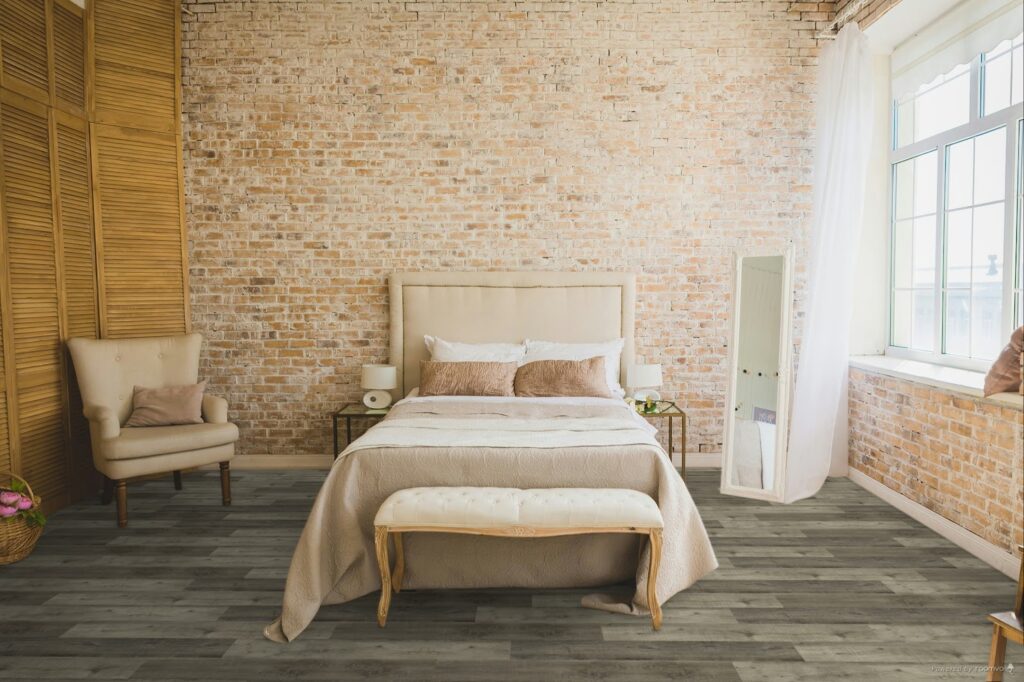
Option 3: Engineered Hardwood For Premium Units And “Value-Add” Upgrades
Engineered hardwood can make sense in multi-family when you’re targeting higher rents, condo buyers, or a more premium brand position. It’s real wood, but built in layers to improve dimensional stability compared to solid hardwood.
Where Engineered Hardwood Fits Best
- Premium units
- Top-floor units (often easier from an acoustic planning standpoint than mid-level wood-over-wood scenarios)
- Owner-occupied condos where buyers expect “real wood” as a finish
What It Needs To Succeed
- Moisture management of wood products requires careful handling of site conditions (slab moisture testing, acclimation, and appropriate adhesives/underlayments, as applicable).
- Scratch expectations, it’s still wood. It can scratch and dent. The goal is appropriate placement and clear owner/tenant expectations, not pretending it’s indestructible.
- Acoustic planning wood-look floors is often where noise complaints arise when the assembly (underlayment, structure, and ceiling) isn’t designed and tested as a system.
Bottom Line
Engineered hardwood can be a smart upgrade in the right places; don’t force it in every unit if the building and resident profile don’t support it.
The Multi-Family Decision Framework: Match The Floor To The Space
A clean way to spec multi-family flooring is to break the building into zones:
Unit Interiors
For most standard units:
- LVP flooring is often the best blend of durability, maintenance, and cost control.
For premium units:
- Engineered hardwood can differentiate itself from LVP in wet areas, depending on your design plan.
Corridors, Stairs, And Common Areas
- Glue-down LVT flooring is commonly chosen for its stability and service life.
- For stairs, plan nosings and transitions early; stair details are where “nice floor” installations turn into punch-list pain.
Leasing, Gyms, Clubhouses, And Amenities
- LVT often wins for design control and heavier traffic.
- LVP can still work in some amenity layouts, especially if the subfloor and acoustic plan are proper.
Don’t Skip Acoustics: How To Reduce Noise Complaints (And Callbacks)
Noise is one of the fastest ways for a building to feel “cheap,” even when it isn’t. The key is to treat acoustics as an assembly, not a single product.
In the lab, the impact sound transmission of floor-ceiling assemblies can be measured using standardized methods like ASTM E492, which uses a tapping machine to evaluate impact noise transfer through a floor-ceiling system.
What to do with that information:
- Request tested acoustic ratings for the entire assembly where possible (not just “underlayment marketing numbers”).
- Align your flooring and underlayment with your building type (wood frame vs. concrete) and local expectations/requirements.
- Ensure your installation details (perimeter isolation, transitions, stair details) align with the acoustic intent.
IAQ And “Healthy Building” Specs: What To Request Without Overcomplicating It
If you’re building or renovating units where low chemical emissions matter (residential tenants, sensitive populations, green building goals), you don’t have to guess.
Two common, recognizable paths:
1. FloorScore
An IAQ certification program for hard-surface flooring, adhesives, and underlayments is widely used across the industry.
2. UL GREENGUARD
Certification focused on low chemical emissions that can support healthier indoor environments.
Practical spec language (conceptually):
- “Hard surface flooring shall be certified to a recognized low-emitting standard (e.g., FloorScore) where required by project IAQ goals.”
This keeps your spec clear, measurable, and easy to enforce during submittals.
The “Best Value Flooring” Move Most Pros Miss: Plan Product Strategy For Turnover
In multi-family, the money is often won or lost after installation:
- Standardize SKUs across unit types to enable maintenance teams to stock fewer items.
- Keep attic stock (extra boxes) for the exact dye lot/run when possible.
- Choose products that allow selective repair (replace a plank/tile) rather than full-room tear-outs.
This is where wholesale and discount flooring strategies can still deliver a premium result if you’re buying the right spec and avoiding corners that cause callbacks.
Supply Chain Reality Along I-85: Keep Jobs Moving From Greenville To Atlanta To Charlotte And Beyond
Whether you’re working in Greenville, SC, Atlanta, GA, the Charlotte region, or anywhere along the I-85 corridor, multi-family timelines don’t wait. A flooring partner should help you:
- Compare LVP, LVT, and engineered hardwood options quickly
- Build a clean, repeatable spec for your crews
- Ship directly to the jobsite to reduce handling and delays
That’s the operational idea behind a Pro-focused buying process, getting high-quality flooring where it needs to be, when it needs to be there, while protecting your margin.

Choose The Floor That Protects Your Schedule, Reputation, And Margins
For most multi-family builds, LVP flooring is the workhorse for units, LVT flooring is the problem-solver for corridors and amenities, and engineered hardwood is the targeted upgrade for premium positioning. The “best flooring” isn’t a single product; it’s the right mix, clearly specified for durability, acoustics, IAQ, and long-term maintenance.
If you’re sourcing flooring in Greenville, flooring in Atlanta, flooring in Charlotte, or building anywhere along I-85 (or drop shipping anywhere in the USA), The Flooring Supply can help you compare options, standardize choices across projects, and get materials delivered directly to your jobsite.Explore products and pro-friendly ordering at https://theflooringsupply.com/ and check out more builder-focused guidance on https://theflooringsupply.com/beyond-the-supply/.