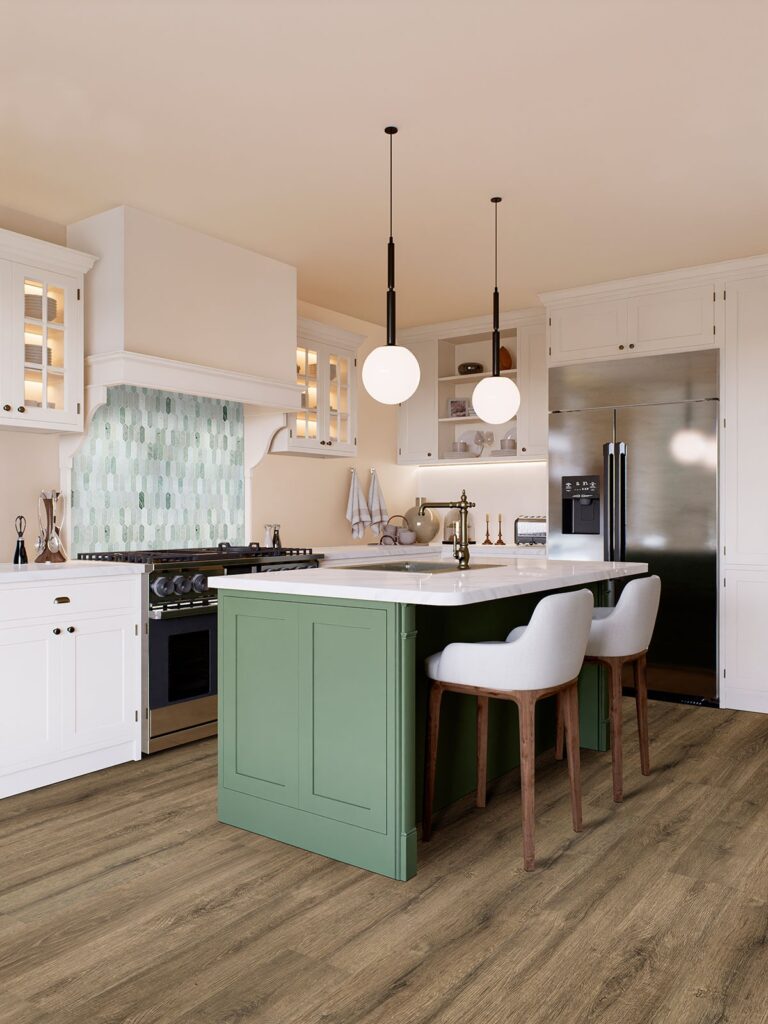
Water damage is one of the most common reasons homeowners replace flooring. Whether it’s daily spills in the kitchen, constant moisture in the bathroom, or humidity in a basement, selecting the right flooring helps protect your investment while reducing maintenance over time.
For homeowners and flooring professionals alike, understanding which products perform best in moisture-prone spaces can make installation decisions much easier. At The Flooring Supply, you’ll find high-quality flooring solutions for residential and commercial projects throughout Greenville, SC; Atlanta, GA; Charlotte, NC; and across the United States, with convenient direct shipping.
This guide explains the best waterproof flooring options for kitchens, bathrooms, and basements while helping you choose the right material for each environment.
Why Waterproof Flooring Matters
Water can cause several flooring problems, including:
- Warping and swelling
- Mould and mildew growth beneath the flooring
- Adhesive failure
- Surface staining
- Costly repairs and replacements
According to the U.S. Environmental Protection Agency (EPA), controlling indoor moisture is one of the most effective ways to prevent mould growth inside buildings. Flooring that resists water intrusion plays an important role in maintaining healthier indoor environments.
Not every flooring marketed as “water-resistant” performs the same way. Understanding the differences between waterproof and water-resistant flooring is essential before making a purchase.
Waterproof vs. Water-Resistant Flooring
Although the terms are often used interchangeably, they mean different things.
| Waterproof Flooring | Water-Resistant Flooring |
| Prevents water from penetrating the flooring itself | Resists spills for a limited time |
| Suitable for high-moisture environments | Better for dry or moderately damp areas |
| Handles standing water more effectively | Prolonged exposure may cause damage |
For kitchens, bathrooms, laundry rooms, mudrooms, and many basements, fully waterproof flooring typically offers the greatest long-term value.
Best Waterproof Flooring for Kitchens
The kitchen experiences frequent spills, dropped dishes, pet traffic, and heavy foot traffic.
The best flooring should offer:
- Waterproof performance
- Scratch resistance
- Easy cleaning
- Comfortable walking surface
- Attractive appearance
Luxury Vinyl Plank (LVP Flooring)
LVP flooring is one of the most popular choices for modern kitchens because it combines durability with realistic wood visuals.
Benefits include:
- Fully waterproof construction
- Excellent scratch resistance
- Softer underfoot than tile
- Easy click-lock installation
- Available in numerous wood styles
Many homeowners appreciate that luxury vinyl plank creates the appearance of hardwood without concerns about moisture damage.
Best Waterproof Flooring for Bathrooms
Bathrooms expose flooring to constant humidity, splashes, and standing water.
Ideal flooring should resist:
- Moisture
- Mold
- Daily cleaning products
- Heavy foot traffic
Luxury Vinyl Tile (LVT Flooring)
LVT flooring offers many of the same waterproof benefits as LVP while recreating the appearance of natural stone, slate, or ceramic tile.
Advantages include:
- Waterproof construction
- Slip-resistant texture options
- Low maintenance
- Comfortable underfoot
- Durable wear layers for long-lasting performance
Unlike natural stone, LVT generally requires less maintenance and does not need periodic sealing.
Best Waterproof Flooring for Basements
Basements often experience:
- Higher humidity
- Temperature fluctuations
- Occasional moisture intrusion
- Concrete subfloors
Traditional hardwood flooring is usually not recommended for below-grade installations due to moisture concerns.
Instead, many professionals recommend:
Luxury Vinyl Plank
LVP performs exceptionally well in basements because it tolerates moisture while maintaining dimensional stability.
Benefits include:
- Waterproof core
- Floating installation over concrete
- Reduced maintenance
- Comfortable surface
- Wide range of styles
Adding an appropriate underlayment can also improve sound reduction and comfort.
Where Does Engineered Hardwood Fit?
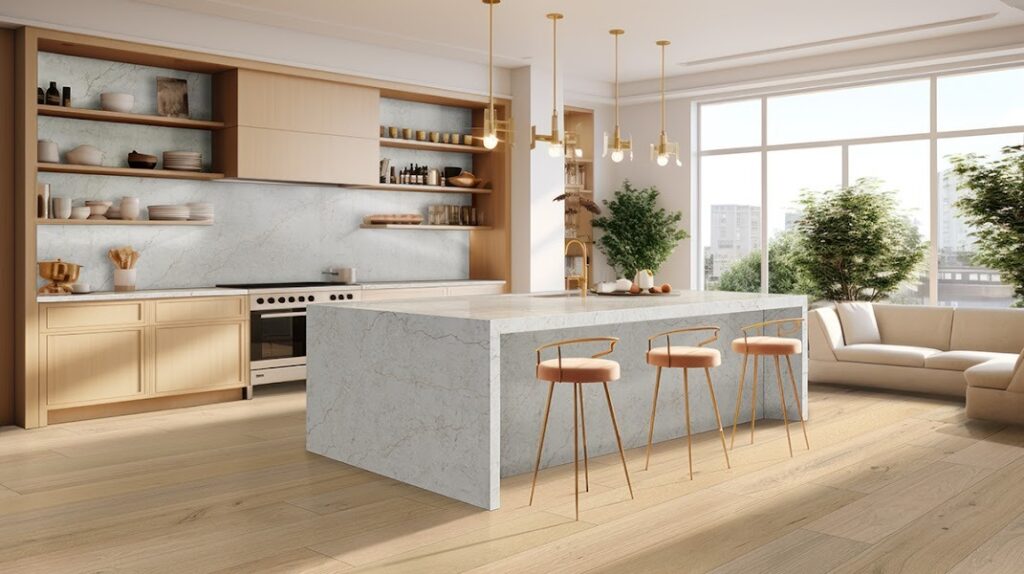
Engineered hardwood offers greater dimensional stability than traditional solid hardwood because its layered construction reduces expansion and contraction.
However, it is important to understand that engineered hardwood is not waterproof.
It performs well in:
- Living rooms
- Bedrooms
- Dining rooms
- Hallways
Depending on the product specifications and moisture conditions, some engineered hardwood products may also work in kitchens where spills are cleaned promptly.
Bathrooms and damp basements generally require waterproof flooring instead.
Choosing the Right Flooring for Each Room
| Room | Recommended Flooring |
| Kitchen | Luxury Vinyl Plank (LVP) |
| Bathroom | Luxury Vinyl Tile (LVT) |
| Basement | Luxury Vinyl Plank (LVP) |
| Laundry Room | LVP or LVT |
| Mudroom | LVP |
| Living Room | Engineered Hardwood or LVP |
| Bedroom | Engineered Hardwood or LVP |
Matching flooring to each room’s moisture exposure helps maximize durability and minimize future maintenance.
What Flooring Professionals Should Consider
Contractors, builders, and restoration professionals often evaluate flooring differently from homeowners.
Important considerations include:
- Installation efficiency
- Product availability
- Warranty support
- Reliable inventory
- Competitive pricing
- Direct shipping
Choosing dependable wholesale flooring suppliers helps projects stay on schedule while reducing unnecessary delays.
For professionals working throughout the I-85 corridor from Atlanta to Greenville and surrounding markets, having consistent access to high-quality flooring can improve project efficiency and customer satisfaction.
Tips for Long-Term Performance
Even waterproof flooring benefits from proper installation and maintenance.
To maximize lifespan:
- Prepare subfloors according to manufacturer guidelines.
- Clean spills promptly.
- Use recommended underlayment where required.
- Maintain proper indoor humidity.
- Install transition strips in adjoining spaces.
- Follow the manufacturer’s cleaning recommendations.
Professional installation can also help ensure warranties remain valid.
Finding the Best Value Flooring
The lowest-priced flooring isn’t always the best long-term investment.
Instead, look for products that balance:
- Waterproof performance
- Wear layer durability
- Reliable construction
- Attractive appearance
- Competitive pricing
Luxury vinyl flooring continues to offer one of the strongest combinations of durability, design flexibility, and value for both homeowners and contractors.
Choose Waterproof Flooring with Confidence
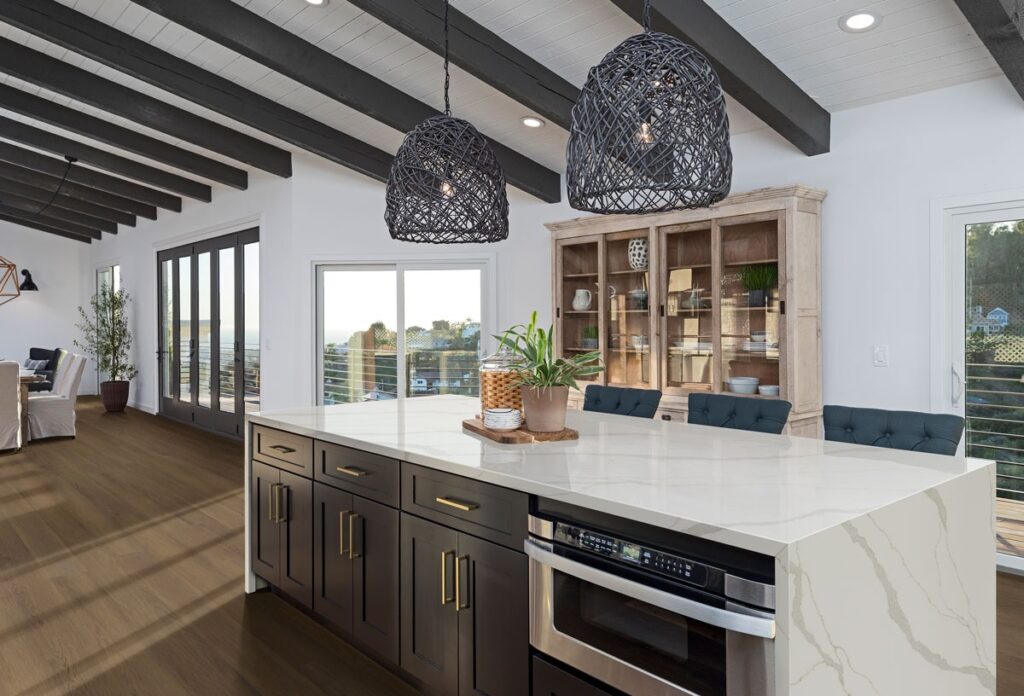
Whether you’re renovating a kitchen, updating a bathroom, or finishing a basement, selecting flooring designed for moisture-prone environments can help protect your home and reduce future maintenance needs.
Luxury Vinyl Plank (LVP) and Luxury Vinyl Tile (LVT) remain two of the best waterproof flooring options available, while engineered hardwood continues to be an excellent choice for drier living spaces where the warmth of real wood is desired.
If you’re looking for high-quality, discounted, or dependable wholesale flooring for residential or commercial projects, The Flooring Supply offers carefully selected products for homeowners and flooring professionals alike. Visit https://theflooringsupply.com/ to explore premium flooring solutions, compare options, and find the right material for your next project with convenient nationwide shipping.